Posts

19th Century "Influencers"
Image
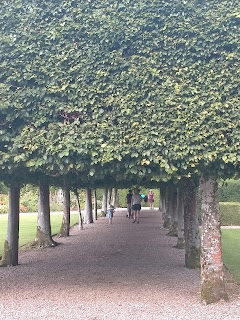
Social media has given everyone the opportunity to become an “Influencer” – people whose authority, knowledge or positions with their audience have the power to affect our decisions. The Italian Garden, Glamis Castle, Scotland  There were influencers in the 19 th Century.     No more so than in the world of horticulture.    Some of whom continue to influence our garden designs today.     My own garden was greatly inspired by the writings of significant 19 th Century horticulturists. Gertrude Jekyll (1843-1932) - an artist and embroiderer, took up gardening at the age of 50 when her sight began to fail.    She met Edwin Lutyens (1869-1944) at the beginning of his architectural career and formed a professional partnership.    He designed the houses and their gardens along formal lines and she clothed them with plants.    Gertrude Jekyll aimed for cottage garden informality and used winding paths and wilderne...

The Development of the Municipal Park from 1837 to 1910

Image
The industrial towns of the Victorian and Grand Edwardian eras (1837-1910) were grim places.    Two Members of Parliament, R.A. Slayne and E. Chadwick, were responsible for passing the Public Health Bill of 1846.   The Act of Parliament ensured towns provided walks for the public at a time of industrial pollution and contamination.    Probably the most important development was the designing and building of Municipal Parks that began in the middle of the 19 th  Century.    This was a significant period of time for the creating of gardens in Great Britain.   A variety of civic parks were established. The Ornamental City Park consisted mainly of artificial lakes, shelters and specimen trees.    The parks were often built in association with New Towns, for example Birkenhead Park, near Liverpool, designed by Joseph Paxton, was developed in 1845. The birth of the public parks department  spread an...

Learn how to tend your garden in Cumbria?

Image
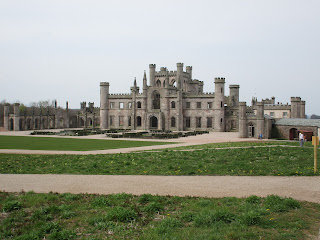
Regular writing of my blog has eluded me - visiting gardens in the glorious sunshine and battling with my own fellside plot has interfered.    Today the much needed rain has drenched the Cumbria landscape.    The earth was desiccated until Thursday, now it is soggy.     My horticultural courses are complete.    Newton Rigg College closed yesterday but is being resurrected at Lowther Castle and Gardens just outside Penrith by Shelagh Todd, Louise Stoddart and Lyn Brunetti who between them have over 120 years of horticultural experience. To find out out more about this new venture check their website is  https://www.nrtraining.co.uk/the-school-of-horticulture   The inspirational landscape of Lowther Castle, near Penrith The two courses I participated in were outstanding - Garden Design with Plants and RHS Level 2 Horticulture.    I loved learning with Shelagh, Louise and Lyn.    Sharing my experience with fell...

Why, how and when did the Victorians Cut Grass?

Image
The nineteenth century was the century of the new.    A significant period for gardening in Britain.  There were new tools for cutting, pruning digging and weeding.   The lawnmower was invented in 1831 by Edward Beard Budding (1796-1846), an engineer in a textile factory who adapted a cloth-shearing machine to provide the perfect smooth lawn.    In 1842 he invented the adjustable spanner. The large mower on great estates was pulled by a horse wearing leather shoes, to protect the close cut sward.    The smaller version  was easy to push and adopted throughout the country in small city gardens. The Horticultural Society became Royal in 1861 when Queen Victoria's husband, Prince Albert (1819-1861), obtained a charter for what we now know as the RHS. Plant hunting became fashionable and was sponsored by wealthy gardeners, nurserymen and the Royal Horticultural Society.    The plant hunters themselves were knowledgeable and worked ...

Passing Time On A Wet day

Image
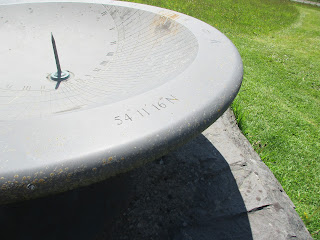
In Cumbria we have just had the wettest May on record.    At a Latitude of 54 degrees North our flower display are far behind the rest of England.  Last week I visited Holker Hall and Gardens, Cark In Cartmel - the planting schemes did not disappoint.    The wet and cold weather has given us amazing displays of bluebells, Rhododendrons and Azaleas.   In the middle of the wild flower meadow is a beautiful slate sun dial clearly stating that we were 54 degrees 11' 16" North. The area is warmed by the Gulf Stream as it drifts through Morecambe Bay on its journey from the southern United States of America.   Without the Gulf Stream England would have a similar climate to the state of Alaska. When I left home the rain was falling from a grey sky.    A one hour drive south to Holker Hall and the sun was shining, the sky blue. The Holker Hall sundial is a fine example of Burlington Grey Slate, unlike the usual stone employed by dial makers...

Searching for the Sublime in Cumbria.

Image
Dalemain Mansion's HaHa  The Landscape Movement was in full stride in the 1790's and without it the England's Lake District National Park would look totally different today. The English Landscape Movement created gently rolling hills and trickling streams, planned against a back drop of forests, with groups of trees in the foreground.    Tree planting, the blasting of rocks to gain access created new vistas and the picturesque scenes we love today. Levens Hall near Kendal was the first place in the British Isles to build, then record a HaHa.  This was something of an innovation.   Until the early 18th Century all gardens had to be enclosed by wall, fence or hedge.   The HaHa is a ditch that facilitates the landscape to be viewed from the garden without interruption. Dalemain near Penrith also boasted a HaHa enabling them to further expand the terraced walks and the garden below the orchard wall to become part of an 18th Century Low Garden. Leven H...

Thomas Mawson - Extraordinary Gardens and Landscapes

Image
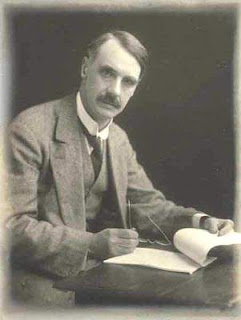
T. H. Mawson (1861-1933) was a British garden designer, landscape architect, and town planner.   On t he 5th May 2021 we celebrated the 160th anniversary of his birth.     Early in his working life, Thomas  Hayton Mawson moved to Windermere to set up a nursery business following a keen interest in gardening.   Lakeland Nurseries was a venture with his two brothers to explore garden design. During his illustrious career he created some wonderful gardens in the Lake District and Cumbria.   The design practice prospered.   Wealthy clients, who came to the area when the railway network began its development 1847, bought into the idea of blending their gardens with the landscape. The gardens designed in Cumbria included those at Graythwaite Hall, Langdale Chase (now a hotel), Holehird, Brockhole, Holker Hall and Rydal Hall. Thomas Hayton Mawson Thomas Mawson published "The Art and Craft of Garden Making" in 1900 and four further editions...

The Landscape Movement

Image
At the beginning of the 18th Century (1705) the Brompton Nursery, in the centre of London, valued its entire stock of clipped evergreen trees and shrubs at £40,000.    The plants were sold at 1 penny per plant so they probably had more the 9,600,000 plants.     The demand for topiary was huge, but soon to become unfashionable when the change to landscape gardens took place.   The landscape garden movement was greatly influenced by two men William Kent (1685-1748), in the first quarter of the 18th Century, and Lancelot (Capability) Brown (1716-1782) in the second half of the century. The Enclosures Acts from 1830, when common land was enclosed in walled or hedged fields, changed the face of the landscape. The large houses developed country parks with the help of the Ha Ha - a walled bank made by cutting the ground away to form a large sunken area.   Taking the place of a fence the Ha Ha could not be seen from the house and had the effect of jo...

Exploring Dacre and Dalemain Historic Gardens

Image
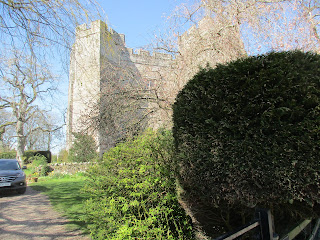
Thursday was a perfect day for a walk from the tiny village of Dacre to Dalemain Mansion and the historic gardens.    We set off past St. Andrew's church, the Dacre Clock Company offices and Dacre Castle.  The views were stunning, the North Pennines, the Lakeland fells and lush verdant fields.   Newly born lambs accompanied us. We sat outside the ancient barn drinking coffee accompanied by marmalade ginger bread cake.   Dalemain is internationally famous for the annual marmalade festival.   No one else was around.   Peaceful and tranquil.    Trees were literally bursting into leaf as we sat.   The gardens are magical.    No need for words.    Dacre Castle   Dalemain's Elizabethan Cobbled Courtyard The Elizabethan Parterre The Spiral Garden Views of the North Pennines The Rose Walk The Top Garden - exciting new developments Ribes sanguineum 'Album' We finished the day in Dacre.  ...

Exploring the Great Gardens of Cumbria from 1485-1603

Image
As the Spring sunshine at last unfolds the bare bones of gardens display their structure to the  dedicated horticulturist.    This time is ideal for the enthusiastic gardener to visit gardens open to the public.      April's cold weather has put on a great show of daffodils and primulas too. Many beautiful gardens open to the public during April.   Several in Cumbria have their foundations in the reign of the Tudor (1485-1603) and Stuart Kings(1603-1714).   Dalemain Mansion , near Penrith, was purchased in 1679 by Sir Edward Hassell (1642-1717).   He was  secretarie and chiefe officer  Lady Anne Clifford (1590-1676), the last member of one of England's great medieval dynasties who became a legend in her own lifetime she fought a 40 year battle for the right to inherit her father's estates then devoted herself to restoring and enhancing castles and churches on her land.   Her castles were in both Cumbri...